20,000 Bouncy Balls Dropped from a Helicopter [Video]
The students of the Utah State University Society of Physics Students held an unique science experiment, and set a new world record in the process. They dropped 20,000 bouncy balls…


The students of the Utah State University Society of Physics Students held an unique science experiment, and set a new world record in the process. They dropped 20,000 bouncy balls…
A time-lapse video of a whole night, captured at the ESO ALMA Array Operations Site, located at 5000 meters above sea level on the Chajnantor plateau, in the Atacama desert…
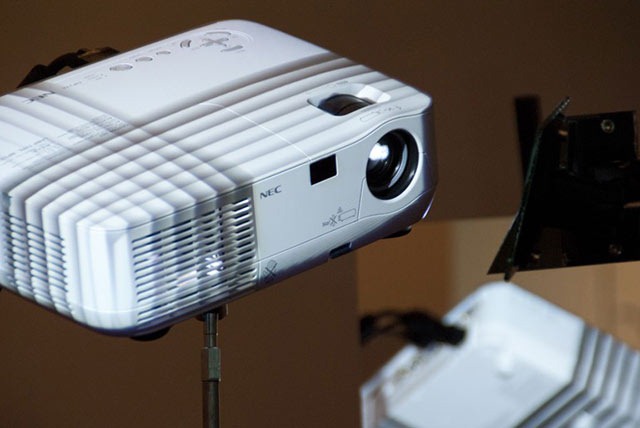
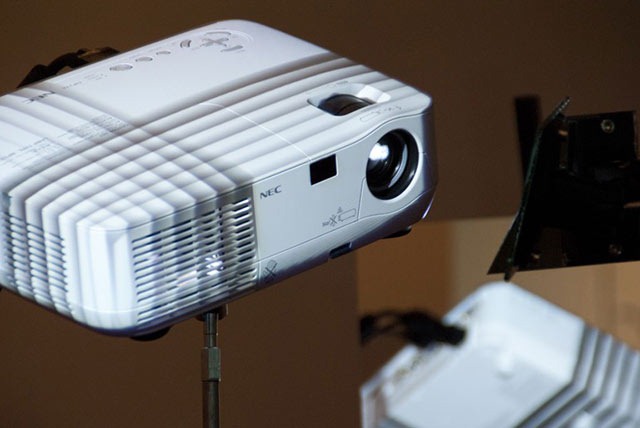
RE:, an audiovisual art installation by Bram Snijders and Carolien Teunisse, was part of the ‘Borderless Reality’ exhibition held in Seoul, Korea.
Using 360° projection-mapping techniques and a complicated arrangement of mirrors, the installation allows a projector to beam images back on to its own surface.
Virtual pixels become points of augmentation in actual space? The reflected projection makes a mixed reality appear and disappear. In most cases the projector has a functional role in a video-installation; the projector in ‘RE:’ functions as a symbol for both sender as receiver of the medium (of) light.
You can watch the video of the installation in action, after the jump.
Did you know that each square mile of the sky is teeming with billions of insects, which use air currents as superhighways to travel from one place to another?
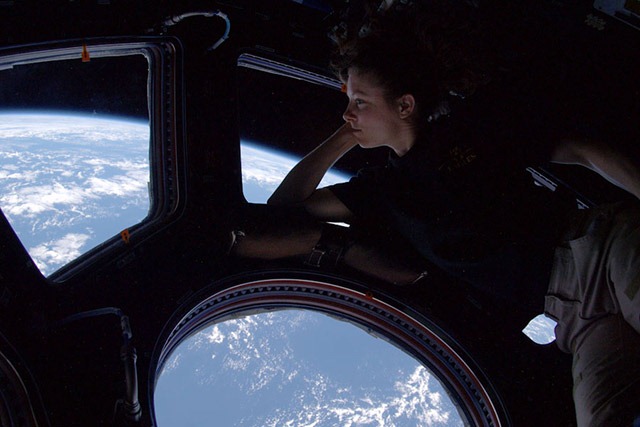
Image Credit: NASA A spectacular photograph of astronaut Tracy Caldwell Dyson gazing at our fragile blue planet through the windows of the International Space Station. The image was taken in…
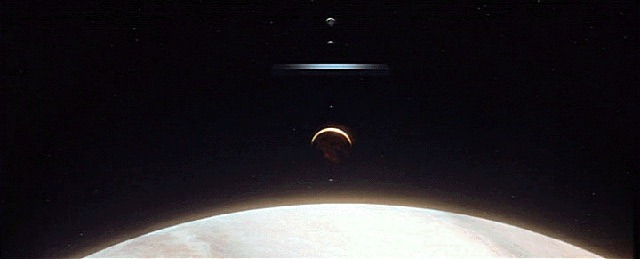
The Wikipedia entry for ‘unknown unknown’: The term unknown unknown refers to circumstances or outcomes that were not conceived of by an observer at a given point in time. The…
The night sky is dotted with billions and billions of stars, with a combined luminosity that is more brighter than the surface of the sun. The question remains, then, why…
For thousands of years, people have wondered how the builders of Stonehenge were able to maneuver and place the massive rocks into position. Wally Wallington, a retired construction worker from…
Vladimir Bulovic, a professor at MIT, gives us a simple demonstration of how OLEDs work. By running an electrical current through an ordinary pickle!
“Gimme a Hug”, a documentary by the Protect The Sharks Foundation, won the Palm De Bronze at the 35th Mondial De L’image Sous-Marine film festival in Antibes, France. The documentary…